
What Waiting for Someone to Change Really Costs You
/
Waiting for someone to change has become deeply normalized in modern relationships—but it comes at a devastating cost. This article explores why we attach too quickly, ignore early misalignment, and then attempt to change our partners instead of honoring ourselves. You’ll learn the difference between healthy growth and forced change, why tolerating unmet needs isn’t love or patience, and how authentic alignment requires choosing relationships based on reality—not hope.
Waiting for someone to change has subtly become one of the most normalized relationship patterns of our time.
We rarely question it. We rarely call it what it is. And we often confuse it with love, patience, loyalty, or emotional maturity.
But beneath the surface, waiting for someone to change is often something else entirely.
It’s self-abandonment presenting itself as virtue.
“The quality of our relationships determines the quality of our lives.”
—Esther Perel
How We End Up Here
Most people don’t intend to end up in relationships where they are chronically explaining, negotiating, and pleading for basic needs to be met.
It happens subtly.
We meet someone.
There’s chemistry.
There’s connection.
There’s hope.
And before we’ve really taken the time to observe who this person is in practice, we get attached.
We attach to:
the projection of who we think they are
who they tell us they are
potential
who they could be
how they make us feel in moments, not how consistently they show up over time
Then, slowly, reality starts tapping on the glass.
Something feels off.
A pattern emerges.
Needs go unmet.
Values don’t quite line up.
Effort feels uneven.
Emotional availability is inconsistent.
And instead of pausing, reassessing, and walking away when something clearly doesn’t work, many of us do something far more socially accepted.
We try to change the person.
(Unmet needs aren’t the problem. They’re the signal. When you’re not aligned with your own emotional needs, you abandon them—
then wonder why others do too. But when you’re truly aligned with what you need, one-sided dynamics simply can’t survive.
✨ Get clear. Get confident. Get your needs met. The No More Unmet Needs Workbook will walk you through it step by step 👉 Download now)
The Normalization of Trying to Change Your Partner
Trying to change someone in a relationship has been deeply normalized, especially for people who are thoughtful, emotionally aware, and willing to do the work.
We’re taught that love means:
Communicating endlessly
Being patient
Explaining ourselves better
Giving someone “time”
Offering grace
Believing in growth

So when something isn’t working, we don’t see it as a compatibility issue.
We see it as a communication problem.
We see it as something to “work through”.
We believe that if we just explain our needs more clearly, more calmly, more compassionately, the other person will finally get it.
And if they don’t?
We assume we just haven’t tried hard enough.
This is where love turns into labor, and resentment begins to fester.
“When someone shows you who they are, believe them the first time.”
—Maya Angelou
When “Loving” Becomes Controlling
Here’s an uncomfortable truth most people don’t want to face:
Trying to change someone so you can stay with them is not love.
It’s control rooted in fear. When we don’t feel safe, we often try to restore a sense of stability by managing the behaviors and actions that make us feel unsettled.
It becomes an attempt to reshape reality so we don’t have to admit that we chose someone too quickly, or that they no longer meet our standards, and then grieve what isn’t working. Yet real safety is created another way—by becoming our own safe place through self-management, not by managing other people.
This pattern almost always coexists with self-abandonment.
Because while you’re focused on fixing, teaching, guiding, or waiting for the other person to evolve, you’re not honoring your own needs, limits, or standards.
You end up tolerating a dynamic that requires you to shrink, over-function, or override your own inner knowing.
And over time, this erodes something essential inside you.
The Cost of Waiting for Someone to Change
Waiting comes with a price.
And the bill always comes due.
It costs you:
Your clarity
Your energy
Your self-trust
Your time
Your emotional vitality
Your self-respect
It trains your nervous system to normalize disappointment. It teaches you to doubt your own instincts. It keeps you stuck in limbo instead of living your life fully. And perhaps most painfully, it pulls your focus away from the only person you actually have responsibility for: yourself.
The Truth Most People Avoid
Here’s something that’s hard to accept, but deeply liberating once you do:
Many people want to be partnered, but do not want the responsibility of being a good partner.
They want connection, comfort, access and companionship.
But they do not want to stretch, self-reflect, take accountability, or consistently consider another person’s needs alongside their own.
And as long as the relationship continues—despite their lack of effort—they have no real incentive to change.
If someone sees that their way of being hurts you, and you stay anyway, they’ve learned something very clear.
This works for them. They can be low-effort and have a relationship.
Growth vs. Forced Change
This is where nuance matters.
People can grow in relationships.
Healthy relationships do involve evolution.
But there is a crucial difference between growth that is chosen and change that is forced.
Healthy growth looks like:
Open, honest expression
Mutual curiosity
Self-reflection
Each person choosing to adjust their own behavior
Accountability without coercion
Unhealthy change looks like:
Repeated conversations
Emotional negotiations
Ultimatums disguised as patience
One person doing the emotional heavy lifting
Staying in pain while waiting for someone else to decide to care
You cannot make someone want to be a better partner.
They either choose it—or they don’t.
Why Repeating Yourself Isn’t Love
One of the most damaging myths in modern relationships is the idea that repeating yourself endlessly is compassion.
It isn’t.
One or two honest conversations about the same issue is enough.
After that, repeating yourself is not:
Patience
Emotional maturity
Understanding
Grace
It’s a refusal to accept reality.
It’s saying, “If I just say this differently one more time, maybe I won’t have to face what’s actually true.”
At that point, the energy shifts from openness to force.
And force is the opposite of alignment.
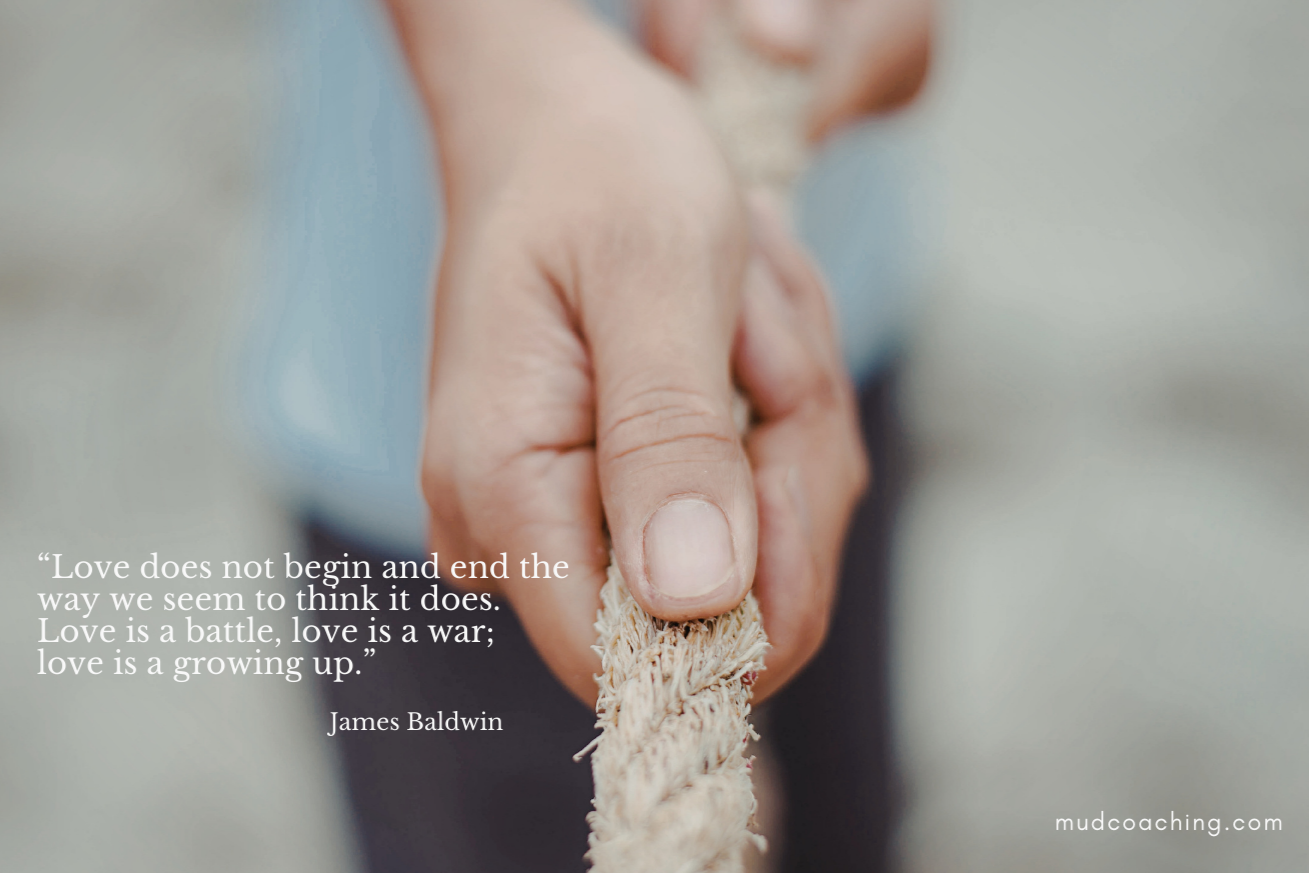
“Love does not begin and end the way we seem to think it does. Love is a battle, love is a war; love is a growing up.”
—James Baldwin
Alignment vs. Force
Alignment flows.
It doesn’t require convincing.
It doesn’t require chasing.
It doesn’t require constant emotional labor.
Alignment works because it’s rooted in reality.
It doesn’t require perfection. It requires mutual respect and both partners actively taking steps to address issues willingly and consistently.
In aligned relationships:
Needs don’t have to be justified
Care is mutual
Effort is reciprocal
Consideration goes both ways
Growth is self-directed, not demanded
Misalignment, on the other hand, creates friction.
It requires force.
It requires persuasion.
It requires endurance.
And endurance is not love.
The Real Work We Avoid
Trying to change someone often keeps us from doing the harder, more honest work.
The work of:
Accepting who someone actually is
Acknowledging what doesn’t work for us
Grieving the fantasy
Choosing ourselves
Walking away when necessary
It’s easier to believe that someone will change than to face the grief of letting go.
But staying comes with its own grief—a quieter one that accumulates over time.
How to Stop Ending Up Here
The solution isn’t to harden yourself or stop caring.
It’s to slow down.
To take your time.
To observe.
To gather data instead of projecting hope.
Early on, express yourself honestly.
Not repeatedly.
Not dramatically.
Just clearly.
Then watch.
Do they listen?
Do they care?
Do they adjust?
Do their actions align with their words?
If yes, you continue.
If no, you don’t repeat yourself and you don’t try harder.
You leave. Or at the very least, you accept that they’re not changing, and pour your focus, energy, and attention back into yourself.
Because alignment isn’t built through persuasion.
It’s revealed through consistency.
Choosing Based on Reality, Not Potential

Most people don’t suffer in relationships because they love too much.
They suffer because they choose based on who they hope someone will become instead of who they are now.
Authentic Alignment asks something braver of us.
To choose based on reality.
To honor our needs without apology.
To accept others without trying to reshape them.
To walk away when something requires us to abandon ourselves to make it work.
That’s not selfishness—it’s self-respect. And it changes everything.
Reflection: Breaking the Pattern of Waiting
If you find yourself waiting for someone to change, it didn’t happen because you’re weak, naïve, or “too much.”
It happened because you made sense of something in the best way you knew how at the time.
This reflection isn’t about blaming yourself.
It’s about gently telling the truth—so you can stop repeating a pattern that no longer serves you.
Take your time with these questions. Write them out if you can. Clarity comes from slowing down and being honest with yourself.
“And the day came when the risk to remain tight in a bud was more p
ainful than the risk it took to blossom.” —Anaïs Nin
1. How Did I Get Here?
Start by understanding how this dynamic formed—without judgment.
What drew me to this person in the beginning?
What did I overlook or minimize early on?
At what point did I notice something wasn’t working?
What did I tell myself when that awareness first surfaced?
When did I start hoping for change instead of responding to reality?
This isn’t about criticizing past choices.
It’s about seeing the moment where attachment replaced discernment.
2. What Have I Been Choosing—And Why?
Waiting is a choice, even when it doesn’t feel like one. Compassionately owning that is where your power returns.
What has staying allowed me to avoid?
What fear keeps me here—loss, loneliness, starting over, being wrong?
What part of me is afraid to walk away?
What belief am I holding about love, commitment, or patience that keeps me waiting?
How have I been prioritizing their comfort over my truth?
Honest answers here are not an indictment.
They’re an invitation to reclaim agency.
3. What Is Actually True Right Now?
This is the most important section—and the hardest to face.
Answer these questions based only on observable reality, not potential.
How does this person consistently show up?
How do they respond when I express my needs?
Have their actions changed, or only their words?
If nothing about them changed, could I be at peace in this relationship?
What does my body feel when I imagine staying exactly as things are?
Truth doesn’t require force.
It doesn’t need convincing.
It simply asks to be acknowledged.
4. How Do I Want to Change?
This is where the pattern truly breaks—not by changing someone else, but by choosing yourself differently.
What boundary am I avoiding setting?
What standard have I been negotiating away?
What would honoring myself actually require?
What kind of relationship do I want to be available for?
Who do I need to become in order to stop waiting and start choosing?
Change begins the moment you decide that alignment—being guided by your deepest truth and self worth—matters more than attachment.
You don’t need more conversations, better wording, or to try harder.
You need to be radically honest with yourself—and act in accordance with it.
That’s how waiting ends.
And that’s how alignment begins.
Waiting for someone to change is rarely about love—it’s about postponing a choice we’re afraid to make. Alignment asks something braver of us. It asks us to build relationships on truth instead of hope, on reality instead of projection, on what is rather than what could be. It asks us to stop abandoning ourselves in the name of patience and start honoring what we know in our bones.
You cannot force a relationship to become right for you, no matter how much you care, how clearly you explain, or how long you wait. But you can choose yourself. And when you do, you create the conditions for relationships that don’t require endurance, persuasion, or self-betrayal—only presence, mutual care, and alignment with who you truly are and what’s best for you.
🫶You reading this means everything to me. If it moved you even a little, would you pass it along? Someone out there needs to feel seen today — and you might be the one who gets it to them.
Gratefully & always,
Dara
If this post stirred something in you, I’d love to help you go deeper and explore what’s been keeping you from having the fulfilling connection you desire.If you’re feeling stuck in your relationship—or questioning whether it’s time to stay or go—you don’t have to figure it out alone.
✨ No More Unmet Needs Workbook
Get clear on what you truly need and stop second-guessing yourself.
👉 Download
✨ Should I Stay or Go? Workbook
Get to the root of your inner conflict by asking the right questions—and finally make a decision you feel at peace with.
👉 Download
✨ Insight Email ($77)
Share your situation and receive clear, personalized guidance on what’s really going on—and what to do next.
👉 Request
✨ Clarity Call-90 Minutes ($177)
Talk it through with me and walk away with a grounded, aligned path forward.
👉 Book
XO,
Dara
Related Blog Posts:


Dara Poznar is a writer and President of Mud Coaching, specializing in Alignment Strategy. She empowers individuals worldwide to align their lives and relationships with their authentic selves. Through her guidance, clients discover how to harmonize their actions, values, and desires to create fulfilling and authentic lives. Learn more about Dara’s personal journey here.
Stop Circling, Start Knowing
You can love someone and still wonder if being together is right.
How do you know when it's time to move on?
When you're caught between love, loyalty, hope, fear, and truth, knowing whether to stay or go can feel agonizing. This question doesn't just sit with you— it lives in you. For months, sometimes years, keeping you suspended between what your heart wants and the doubts your mind can't seem to shake.
Should I Stay or Go? is an 18-page guided relationship clarity workbook designed to help you finally see things clearly enough to feel sure about your answer.
This workbook won't tell you what to do. It will help you understand why you feel so uncertain, resolve the root of your inner conflict, and discover what becomes possible when you have the courage to be radically honest with yourself.
Why this feels so hard
Most people stuck in relationship indecision don't need more advice. They need to resolve the conflicting feelings and beliefs that keep them with one foot in and one foot out—unable to fully choose the relationship, and unable to leave it.
What most people don't realize is that the ambivalence itself is what keeps the relationship from moving forward. Think of one person sitting in a boat while the other has one foot on the dock — the boat can't go anywhere until both people are fully in. The limbo is painful and costly.
This workbook walks you through the 3 core internal obstacles keeping you stuck, addressing each one separately so you can begin to untangle what's really happening beneath the confusion. It asks the right questions—the ones you've been afraid to ask, but know you must.
Why I Created This Workbook
Not long ago, I was in this exact position. I know how torturous it is to live in limbo. To keep circling the same question, exhausted and no closer to peace. But I found my way through.
This workbook is the journey I took to give myself the clarity I needed to make a choice I could feel at peace with— in my heart, my mind, and my soul. It's also shaped by a decade of helping clients navigate this same decision with greater honesty, self-trust, and alignment.
What’s inside
18-page digital workbook
3 core sections each addressing a major obstacle to clarity
15 guided prompts, (5 per section)
Short insights and guidance throughout
Integration section
Free-write space for deep processing
Room to plan your next steps
Who this workbook is for
This workbook is for you if:
you keep going back and forth about whether to stay or leave your relationship and can't seem to land on an answer
you love your partner, but something in you feels chronically unsettled — and you're not sure if that's a sign or just fear
you've been wondering "should I break up with them" for longer than you want to admit
you're tired of overthinking how to know when to leave a relationship — and still not feeling clearer
you keep wondering whether you're asking for too much or settling for too little
you want to finally feel sure you're making the right decision about your relationship
What makes this workbook different
This isn't a workbook full of generic advice or surface-level prompts. It's a deeper process for helping you understand what's keeping you stuck and what your deeper truth has been trying to tell you beneath the fear, hope, guilt, and noise.
It won't push you toward staying. It won't push you toward leaving. It will help you develop the kind of clarity where the most aligned answer rises on its own.
Why this matters now
Indecision is not neutral. Even when you're being thoughtful, prolonged uncertainty takes a toll on your peace, your confidence, your nervous system, your sense of self.
You don't need to rush yourself before you're ready. But you also don't have to stay trapped in the same painful loop. You've been carrying this question long enough. This workbook is here to help you stop circling and start listening—more deeply, more honestly—to what is right for you.
What this workbook can help you do
understand what is truly keeping you stuck
reconnect with your values, needs, and standards
see your relationship with greater clarity
move toward a more confident, self-trusting choice
Get the workbook
Should I Stay or Go? A Guide to Making a Confident Choice
18-page digital workbook | $12
If you're tired of living inside this question and ready for deeper clarity and self-trust, and a clear way forward, this workbook is for you.
14-Day Satisfaction Guarantee Complete the workbook. Apply the steps. If it doesn't shift something for you, email me within 14 days for a full refund. No questions. No friction.
Instant download. Fillable PDF. Yours to return to anytime.
No shipping. No fluff. Just truth, self-trust, and the clarity you need to make a choice you can finally feel at peace with.
XO,
Dara